
Rate scrapers repeatedly query inventory
Automated clients collect prices across dates, room types, and destinations. Examine request activity alongside your booking engine’s logs to understand which clients are creating repeated availability work.
Bot protection for Travel & Hospitality
See the bots browsing rates and availability. Protect booking enquiries with evidence your team can review.
Start Free TrialThe business impact
Automated clients collect prices across dates, room types, and destinations. Examine request activity alongside your booking engine’s logs to understand which clients are creating repeated availability work.
False reservation enquiries and automated contact requests create work for front-desk and sales teams. Form verification and browser evidence help assess automation before a protected submission reaches those teams.
Distribution partners, search engines, and approved tools may need access to parts of your site. Set explicit policies for those integrations and verify supported public crawlers instead of treating every automated request alike.
Inside WebDecoy
The real WebDecoy detections screen exposes the event source and actor context. Your team can use those details alongside reservation and availability logs.
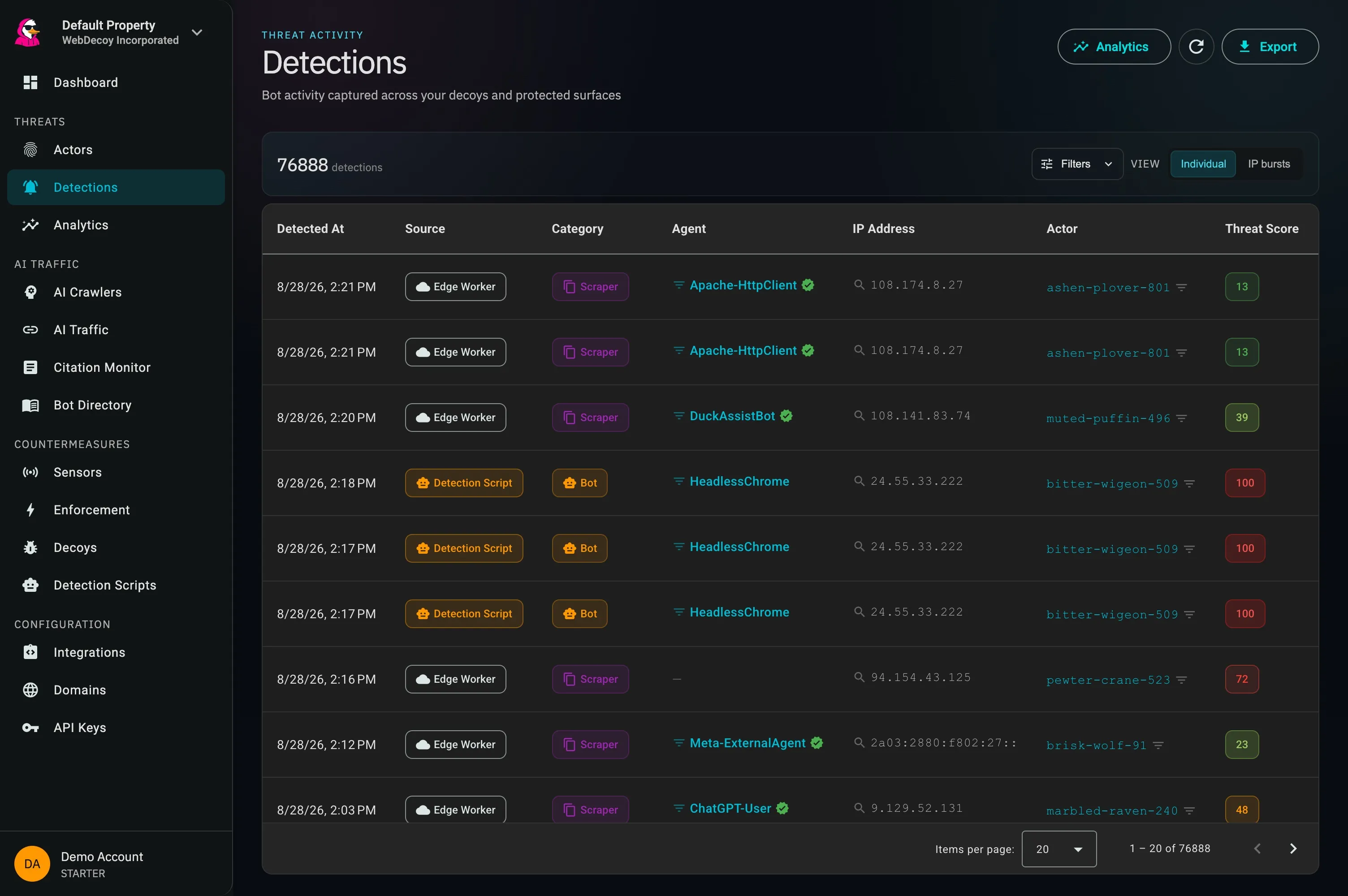
Actual WebDecoy interface. Product views shown with recorded traffic.
How it fits
Observe rate and availability routes on your own domain. Add Edge Sensor for Cloudflare traffic and browser detection for interactive booking journeys within your integration’s coverage.
Explore Edge SensorUse decoy events and available actor signals to connect suspicious visits. Compare the evidence with your rate-search logs before applying a response to a shared network or popular route.
Explore scraping detectionBegin in monitor mode, preserve approved partner access, and protect selected enquiries or searches through supported application and WAF controls.
Explore response controlsDeployment
Confirm who hosts your booking engine before choosing a deployment. You can instrument pages and infrastructure you control; a third-party booking domain or embedded frame may need the provider’s own integration. Start with your public website and enquiry forms when booking access is external.
Choose a plan for your deployment. View platform pricing.
Before you start
Only where the provider supports the required integration or you control the relevant request path. Installing a tag on your marketing website does not automatically protect a booking flow hosted on another domain or inside a third-party frame.
Yes, plan explicit access for approved integrations using your application or edge controls. Public crawler verification is useful for supported operators, but it does not replace authenticating private distribution partners.
No public website can guarantee that visible information will never be copied. WebDecoy helps detect automated collection and apply access decisions through supported integrations; it does not prevent every manual or undetected retrieval.
WebDecoy for Travel & Hospitality