A public listing should not invite unlimited extraction.
01
Listing data is harvested at scale
Descriptions, images, pricing, and seller details can become inputs for competing directories or unsolicited outreach. Watch how automated clients move through listing and search pages, including clients that never load browser analytics.
02
Contact flows become spam channels
Automated enquiries create work for sellers and make legitimate messages harder to find. Collect browser and form-verification evidence before accepting a protected enquiry, and enforce the result on the server.
03
New accounts amplify repeated abuse
A series of accounts can conceal recurring automation. Available actor signals help investigate repeated behavior across sessions and addresses, alongside your own account and moderation records.
Inside WebDecoy
Investigate repeat activity across addresses.
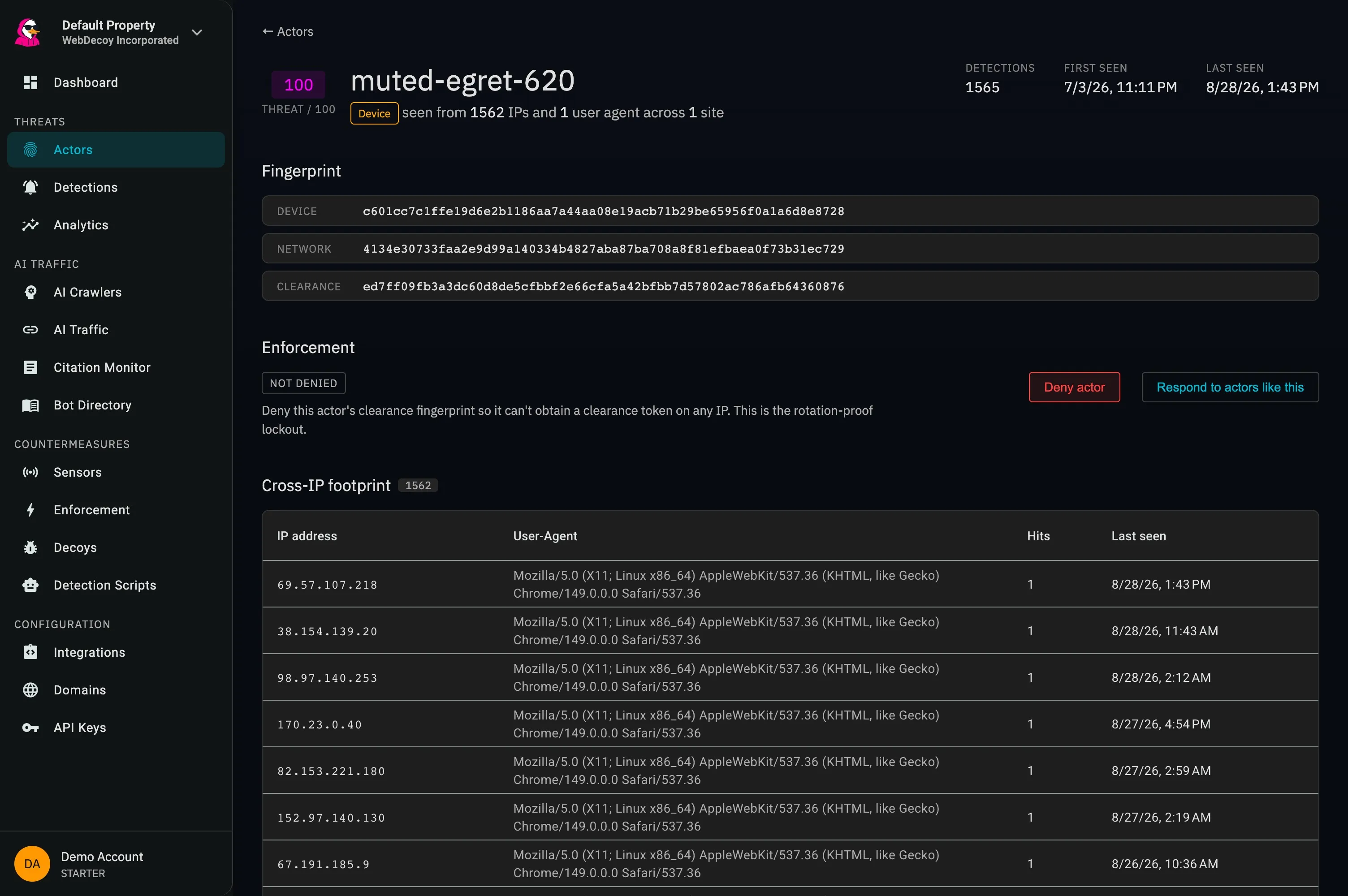
This real actor detail screen brings related addresses and detections together. Pair that view with your listing, messaging, and moderation records when investigating repeated automation. It does not establish that two marketplace accounts belong to the same person.
app.webdecoy.com/actors
Actual WebDecoy interface. Product views shown with recorded traffic.
How it fits
Follow the journey from browse to contact.
01
Observe listing access
Combine request visibility with browser detection to understand how clients traverse search and listing pages. Keep permitted search crawlers distinct from unverified claims.
Place decoy links outside legitimate listing navigation. Examine the actor and event when a client follows one, then correlate that evidence with listing requests in your logs.
Add form verification to enquiry or account-creation routes. Use server-side validation and supported enforcement so the policy applies to the action, not just the visible form.
Start with public listing pages and one protected action, such as seller contact. Use the Node SDK for custom marketplaces or the WordPress plugin for supported sites, then extend coverage after reviewing normal buyer and seller journeys.
Can buyers still browse listings without a challenge?
You can keep browsing open and apply stronger verification to selected actions, such as sending an enquiry. The exact behavior depends on the routes and enforcement controls you configure.
Does WebDecoy detect whether a listing itself is a scam?
WebDecoy detects automation and provides investigation context. It does not replace listing moderation, seller verification, or transaction safeguards, and bot signals alone do not establish whether a listing is fraudulent.
How do we keep listing pages discoverable in search?
Verify supported search crawler identities and preserve their intended access. Review policies in monitor mode before enabling responses that affect public listing pages.