
Content is collected outside your analytics
HTTP crawlers can fetch article after article without running your analytics tag. Edge observation makes that traffic visible, so decisions about AI access start with requests you can actually inspect.
Bot protection for Publishers & Media
See who collects your content, decide who gets access, and measure the visits AI platforms send back.
Start Free TrialThe business impact
HTTP crawlers can fetch article after article without running your analytics tag. Edge observation makes that traffic visible, so decisions about AI access start with requests you can actually inspect.
A scraper can call itself Googlebot or GPTBot in a request header. Supported network and signature checks help distinguish an operator’s traffic from an unproven claim before it earns a place on your allowlist.
A platform can collect many pages while sending few identifiable visits. Compare observed crawls with attributable referrals, and keep shared search-and-AI operators separate when interpreting the exchange.
Inside WebDecoy
The real AI Crawlers & Agents dashboard separates proven identities, unproven claims, and forged identities. It gives your team a starting point for crawler policy without treating a familiar user-agent string as permission.
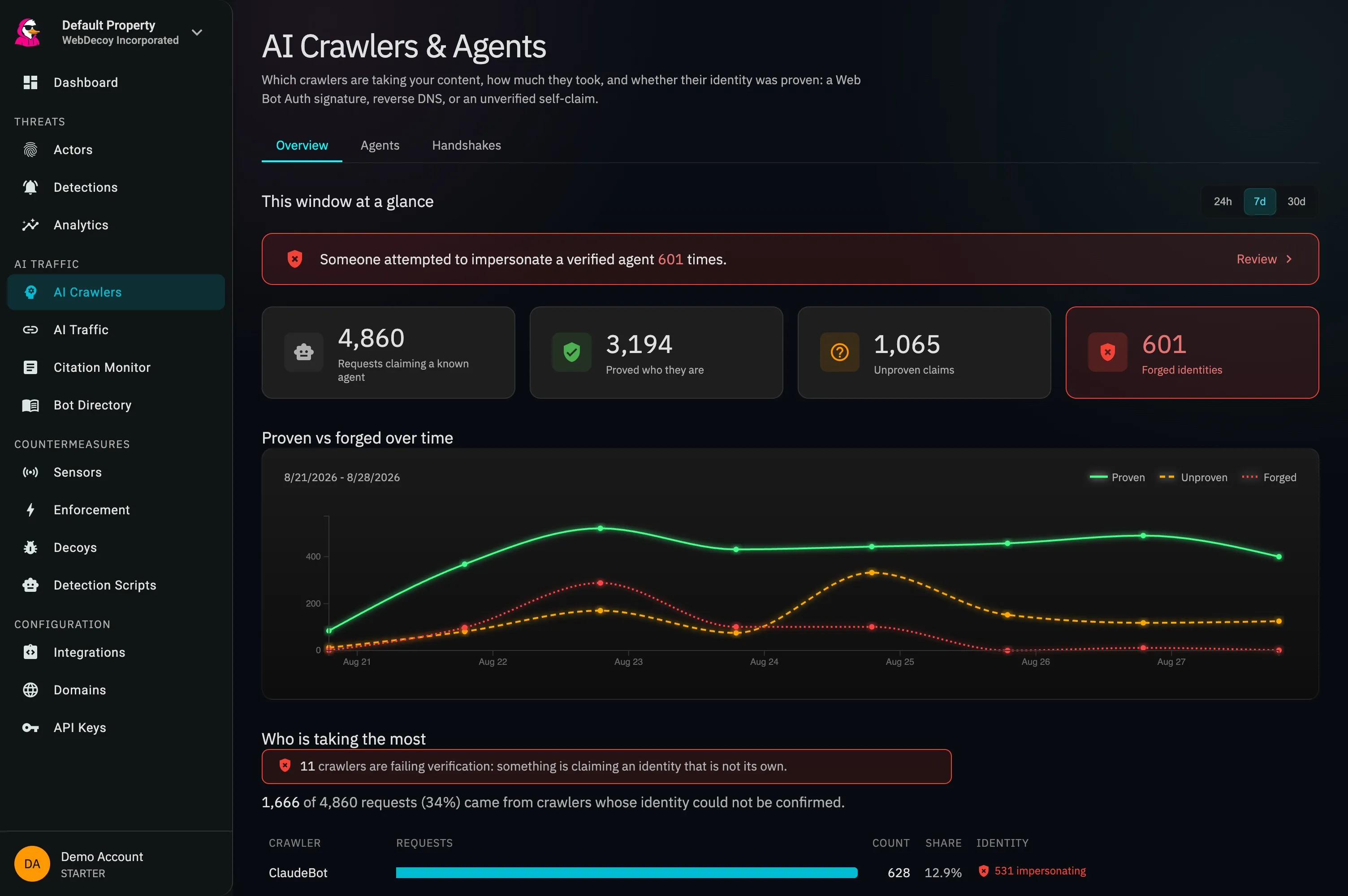
Actual WebDecoy interface. Product views shown with recorded traffic.
How it fits
Deploy Edge Sensor on Cloudflare to observe requests from non-JavaScript clients. Combine it with browser detection and decoy links for automated browsers that interact with the site.
Explore Edge SensorReview supported IP-range, reverse-DNS, and signature evidence. Set per-agent access decisions based on the identities you can establish, with separate treatment for unverified claims.
Explore crawler verificationUse AI Traffic Exchange to compare crawled pages and known AI referrals over the same window. Share a dated report with editorial, audience, and commercial teams before revising policy.
Explore AI Traffic ExchangeDeployment
Start with a section of your publication and observe traffic before enforcing changes. WordPress publishers can add browser detection with the plugin. Cloudflare sites can add Edge Sensor to see HTTP crawlers that a page tag misses.
Choose a plan for your deployment. View platform pricing.
Before you start
It depends on the operator and the access policy. Some operators use infrastructure for both search and AI. Review the crawler’s documented purpose and observed identity before denying it, and keep desired search access explicitly allowed.
No. WebDecoy attributes a referral when the visit includes a recognized AI platform in its Referer header. Platforms and browsers can omit that header, so measured referrals are a floor and the crawl-to-referral ratio is an upper bound.
WebDecoy helps you observe traffic and enforce access decisions through your integration. It does not negotiate content licenses, remove existing copies from external datasets, or control what happens to material already retrieved.
WebDecoy for Publishers & Media